
A great performance nobody can find does not move your athlete closer to a college roster. That is the hard truth behind recruiting visibility examples: talent absolutely matters, but college coaches need a clear, credible way to see that talent, evaluate it in context, and follow up before they can recruit it.
For sports parents, this is where the recruiting process gets confusing and frustrating. Your athlete may be working hard, playing strong competition, and improving every season, yet still receive little attention from college programs. That does not automatically mean they are not good enough. It often means their athletic story is difficult for the right coaches to locate, assess, and act on.
Let me be clear: recruiting visibility is not about chasing social media followers, paying for hype services, or sending the same generic message to 300 schools. It is about helping the right programs see proof of fit at the right time. Visibility does not create talent. It reveals talent that already exists and makes it easier for coaches to evaluate.
What Recruiting Visibility Really Means
Recruiting visibility means a college coach can quickly answer a few basic questions when they encounter your athlete's name: Who is this athlete? Where and when can I watch them compete? What position do they play? What makes them worth evaluating further? And is there a simple, professional way to contact them or their coach?
The best recruiting visibility examples do not manufacture interest out of thin air. They give legitimate interest somewhere to go. A coach still has to like the athlete's ability, academics, character, competitive mindset, and fit for their program culture. No highlight video or social media profile can overcome a major gap in those areas.
But poor visibility can absolutely hide a qualified athlete. If game schedules are unclear, video is hard to watch, emails contain no useful information, or social profiles look careless or immature, coaches will move on. They have limited time, limited staff, and hundreds of prospects to evaluate every recruiting cycle. Make it easy, or get passed over.
6 Recruiting Visibility Examples That Actually Work
1. A Short Highlight Video That Starts Fast
A strong highlight video is one of the clearest recruiting visibility examples because it lets a coach evaluate your athlete on their own schedule, at their own pace, and as many times as they need. The first 20 to 30 seconds matter most. Put the best plays first, identify your athlete clearly with a circle or arrow before each clip, and show game footage against real competition instead of only workout clips or training drills.
For a football player, that may mean showing position-specific snaps that demonstrate football IQ and execution under pressure: release and separation for a receiver, tackling technique and read progression for a linebacker, footwork and hand placement for a lineman. For a basketball player, show decision-making, defensive effort, off-ball movement, and finishing through contact—not just made jump shots from open gym sessions.
Keep it tight. Three to five minutes is usually plenty for an initial evaluation. College coaches do not need a movie trailer with dramatic music and slow-motion effects. They need proof of skill, competitive response, and game performance. Update the video as your athlete improves, especially after a new season, a strong camp performance, or a major development jump.
One more thing: make sure the video is easy to access. A YouTube or Hudl link that loads quickly on any device is better than a large file attachment that clogs an inbox or requires special software to view.
2. A Clean Recruiting Profile With the Facts Coaches Need
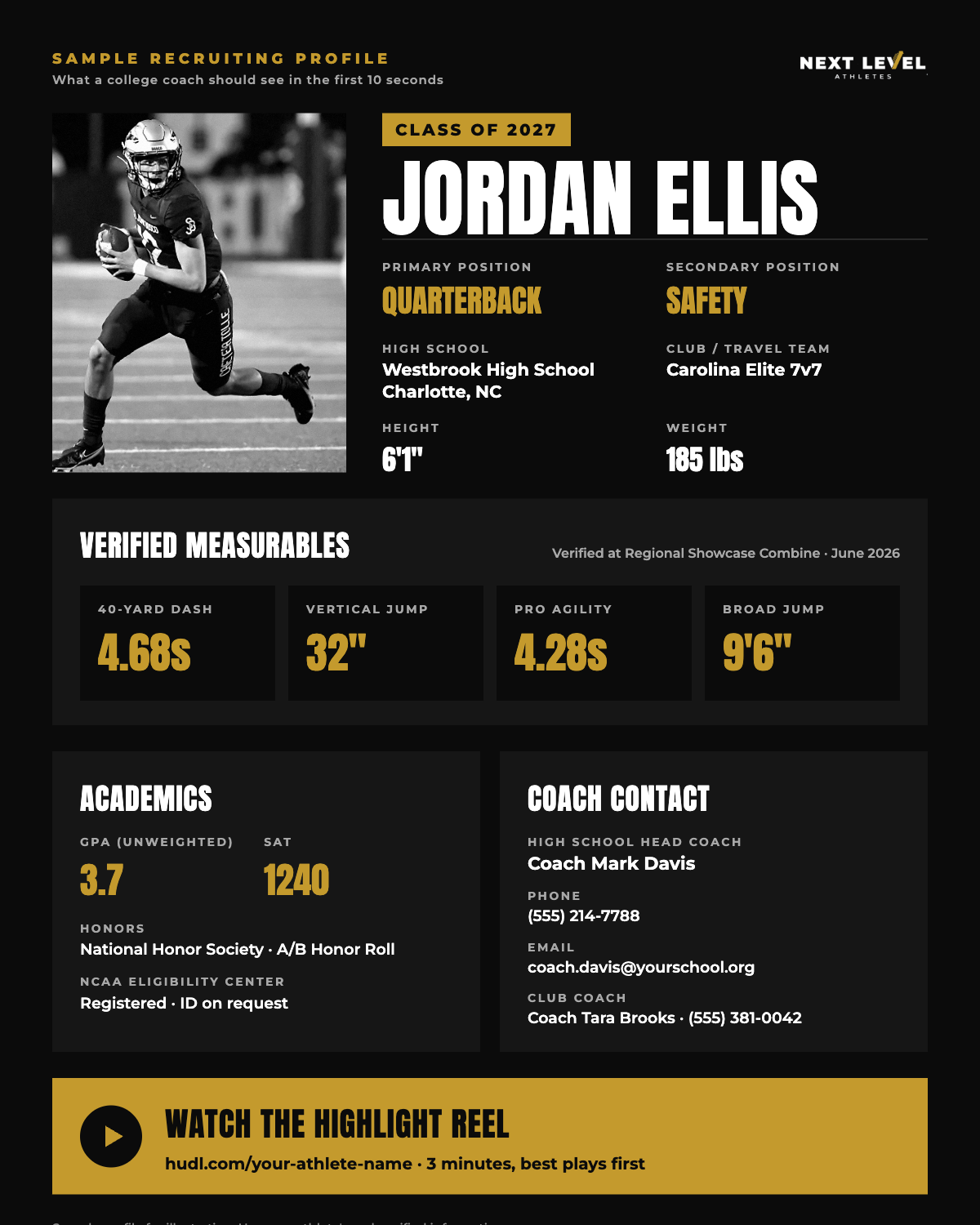
A recruiting profile can be simple, but it cannot be vague or incomplete. At minimum, it should clearly state your athlete's graduation year, primary and secondary positions, high school, club or travel team, height and weight when relevant to the sport, verified athletic measurements (40 time, vertical jump, etc.), current academic information (GPA, test scores, honors), coach contact details, and a link to their highlight video.
Accuracy matters far more than polish. Do not inflate measurements, list a position your athlete rarely plays, or call a camp time "verified" if it was hand-timed at practice by a parent. College coaches will verify information through their own networks and evaluation systems. When the facts do not hold up, credibility drops fast and trust disappears.
Parents can help organize this information and keep it updated, but the athlete should own the profile and the communication. A college coach wants to see a young person who can communicate clearly, follow directions, and take responsibility for their own process. That maturity matters, and it starts long before a recruiting visit or scholarship offer.
Tools like Athlete Narrative can help families organize and present this information in a professional, coach-friendly format that makes evaluation easier.
3. A Targeted Email Before a Live Event
A well-timed email gives a coach a specific reason to watch your athlete at an upcoming tournament, showcase, camp, or regular season game. The key word is targeted. Sending a personal, thoughtful email to 15 schools that genuinely fit your athlete's level and goals is far more useful than blasting a generic template to 150 programs.
The message should be brief and specific. Your athlete should introduce themselves, state their graduation year and position, explain why the school is a realistic fit (academics, location, program style, major offered), include upcoming event details with dates and locations, and share their video and contact information. A sentence about academics, a connection to the program, or a specific reason for interest can help—but only if it is genuine and accurate.
For example, a 2028 softball outfielder attending a major regional tournament might email schools within a realistic geographic and competitive range two weeks before the event. She should include her team name, jersey number, game schedule with field numbers, tournament location, and a direct subject line that makes the basics easy to spot: "2028 OF | June 15–17 PGF Nationals | Video."
Then follow up after the event with a meaningful update—not just "checking in." Mention a new video, a strong performance with context, an academic milestone, or the next opportunity to evaluate. Be persistent and professional without becoming noise in a coach's inbox.
4. A Social Media Account That Supports the Athlete's Story
Social media is not the recruiting plan. It is supporting evidence. A college coach may search your athlete's name after receiving an email, hearing about them from another coach, or seeing them at an event. What appears in that search should make the evaluation easier and reinforce the athlete's character—not create red flags or questions.
A useful athlete social media account has a clear bio with graduation year, sport, position, team, and email. Posts can include short game clips, training progress, schedule updates, academic recognition, and moments that show team-first character and competitive mindset. Keep captions normal and authentic. Let the work speak for itself.
This is also where families need discipline and honest conversations. Complaining about playing time, taking shots at coaches or teammates, posting arguments or drama, or sharing reckless content can cost your athlete real opportunities. College coaches recruit the person as well as the player. They are asking whether this athlete will add maturity, leadership, and positive energy to their locker room—or whether they will create problems.
Your athlete's social media presence is a window into their character and judgment. Make sure it shows what you want a coach to see.
5. A Schedule That Makes Live Evaluation Possible
Live evaluation still carries significant weight in college recruiting because coaches want to see how athletes respond between plays, after mistakes, under pressure, and around teammates. A highlight video can get your athlete on a coach's radar. A live game often helps answer the bigger questions about competitiveness, coachability, body language, and mental toughness.
Make schedules easy to find and easy to read. Include dates, times, locations, team name, jersey number or uniform color, age group or graduation class, and any last-minute schedule changes. If your athlete plays multiple sports or competes on multiple teams, be clear about which events matter most for recruiting purposes.
There is a trade-off here that families need to understand. Some families chase expensive showcases and national events believing exposure alone will create recruiting momentum. Events can help, but only when your athlete is ready for that level of evaluation and the right coaches for their level are likely to attend. Playing meaningful games, continuing skill development, and building a usable, accessible schedule usually matter more than collecting random event badges or tournament T-shirts.
Do not waste money on exposure your athlete is not ready to capitalize on. A coach who watches an unprepared athlete at a high-level event may write them off entirely. Timing matters.
6. A Trusted Coach Who Can Speak Honestly for the Athlete
One strong recommendation from a credible high school, club, or travel coach can open a door that a dozen cold emails cannot. College coaches trust people in their network who give honest, accurate evaluations. That is why athletes need to build real relationships with their coaches year-round—not just ask for favors when recruiting season gets serious.
The best coach outreach includes details a stat line or highlight video cannot show: work habits, coachability, competitive response after adversity, role acceptance, leadership presence, academic discipline, and how the athlete handles conflict or disappointment. Those character traits matter deeply when college programs decide which prospects deserve more time, attention, and scholarship dollars.
Parents should not script a coach's recommendation or pressure them to exaggerate. Instead, ask whether the coach believes your athlete is ready to pursue certain levels, what gaps still need work, and whether they are comfortable making introductions to college programs. Honest feedback may sting in the moment, but it saves families from wasting time, money, and emotional energy on a recruiting plan that does not match the athlete's current ability or development stage.
If a trusted coach hesitates to recommend your athlete or suggests a different level, listen. That is not a personal attack. It is coaching.
Build Visibility Around Fit, Not Hype
The biggest mistake families make is treating recruiting visibility like a popularity contest or a marketing campaign. More views, more followers, and more hype do not equal more scholarship offers. The goal is to be visible to programs that make sense for your athlete's ability level, academic profile, position needs, location preferences, financial reality, and long-term development goals.
A productive recruiting visibility plan starts with an honest evaluation. Can your athlete realistically compete at Division I, Division II, Division III, NAIA, junior college, or another pathway? The answer can change as the athlete develops, and there is no shame in any level. The right school is the one where your athlete can grow, compete, earn a degree, and have a real college experience—not the one with the best logo or the most Instagram followers.
From there, organize the basics: current video that shows real game performance, accurate profile information, a realistic school list based on fit, an event calendar that makes live evaluation possible, and consistent communication that respects coaches' time. Review the plan every few months. A freshman's visibility strategy should not look exactly like a junior's, and a late-developing athlete may need a different timeline and approach than an early standout.
Development and visibility should work together. As your athlete's skills improve, their recruiting story becomes clearer and more compelling. As their story becomes clearer, the right coaches can find them, evaluate them, and recruit them.
Make Your Athlete Easy to Evaluate
Recruiting is competitive, but it does not have to be confusing or mysterious. College coaches are looking for evidence, consistency, and fit. Your job is to give them clean film, correct information, realistic opportunities to see your athlete compete live, and communication that respects their time and process.
Stop guessing your way through recruiting. Help your athlete build a reputation that matches their work ethic and ability, then keep stacking proof every time they train, compete, communicate, and respond to coaching. That is how recruiting visibility becomes real opportunity.

Get a College Recruiting Game Plan for Your Athlete
Not sure where to start with college recruiting—or what your athlete needs to do to get noticed?
Book a College Recruiting Game Plan Call with Coach Nate Daniels to get personalized guidance on your athlete's next steps. Coach Nate can review your athlete's game film, answer your questions about the recruiting process, and help you identify what your athlete needs to work on to become a stronger college prospect.
Stop guessing about your athlete’s prospects. Get a plan for moving forward.