

Your athlete looks great at practice. They can execute the drills, they know the plays, and they've put in the work.
But when the game starts, something changes.
They're a step behind the action. They hesitate when they should react. They get caught out of position or make a decision that leaves you wondering what they were thinking.
And as a parent, you're sitting there asking yourself, Why can't they do what they've been practicing?
I've worked with athletes for more than 20 years, from kids just learning their sport to professionals competing at the highest levels. And one thing I've learned is that having athletic ability and knowing how to play the game are two different things.
I've seen talented athletes who could run, jump, and execute every drill you put in front of them, but when they stepped into a competitive situation, they struggled to make the right decisions.
I've also seen athletes who weren't the fastest or most naturally gifted players on the field consistently make an impact because they understood the game.
They knew where to be. They recognized what was happening. And they could anticipate what was coming next.
That's Game IQ.
And here's what I want sports parents to understand: Game IQ isn't just something an athlete is born with. It's something they can develop.
But you have to train it.
What Is Game IQ in Youth Sports?
Game IQ, sometimes called sports IQ or game intelligence, is an athlete's ability to understand what's happening during competition and make effective decisions based on that information.
It's about more than knowing the rules or memorizing plays.
An athlete with good Game IQ can recognize situations, anticipate what's likely to happen, understand their responsibilities, and make decisions that help their team.
Think about a basketball player who recognizes that a defender is overplaying the passing lane and makes a backdoor cut.
Or a football defensive back who recognizes a receiver's route combination and gets into position before the ball is thrown.
A baseball player who knows where the next play needs to be made before the pitch is delivered.
A soccer player who recognizes open space and moves into position to receive a pass.
Those athletes aren't just reacting to what's happening. They're reading the game.
And that makes a difference.
Because it doesn't matter how fast your athlete is if they're always a step behind mentally.
They can have all the physical tools in the world, but if they don't recognize what's happening quickly enough to use those tools, they're going to struggle.
That's why Game IQ is one of the five pillars of what I call a Complete Athlete: Athleticism, Skills, Game IQ, Mentality, and Habits.
Each one matters. And each one needs to be developed.
Why Do Some Youth Athletes Struggle to Make Decisions During Games?
One of the biggest reasons young athletes struggle during games is that they're used to practicing in controlled environments.
Think about how a lot of individual training works.
A basketball player practices dribbling through cones or shooting from the same spot. A football receiver runs routes without a defender. A baseball player takes ground balls knowing exactly where the ball is coming.
Those drills have value. Athletes need repetitions to develop their technique.
But during a game, everything changes.
Now there are defenders, teammates, opponents, changing situations, and decisions that have to be made in real time.
Your athlete doesn't just have to execute a skill. They have to recognize when, where, and why to use it.
And that's a completely different challenge.
Another reason is experience.
Young athletes are still learning how to recognize patterns and understand different situations. What seems obvious to an adult who has watched or played a sport for years may not be obvious to a 9-year-old.
And sometimes the problem isn't understanding the game at all. An athlete may know what to do but hesitate because they're afraid of making a mistake, or they may be overwhelmed by the speed of competition.
That's why I encourage parents to look beyond the mistake itself and try to understand what's causing it.
Here are five ways to help your athlete develop better Game IQ.
1. Teach Your Athlete to Understand the Game, Not Just Memorize Plays
One of the first things I want athletes to understand is why they're doing something.
It's not enough for a basketball player to know where to stand in an offensive set. They need to understand why they're standing there and what they're supposed to recognize when the defense reacts.
The same goes for football.
A receiver might know they're supposed to run a 10-yard out route. But do they understand what the defender is trying to take away? Do they recognize how the coverage affects the timing and execution of that route?
When athletes understand the purpose behind their assignments, they're better prepared to make adjustments when things don't go exactly as planned.
And in sports, things rarely go exactly as planned.
What parents can do: Ask your athlete to explain the why
After practice or a game, choose one situation and ask your athlete to explain it.
For example:
Basketball: "Why would you cut to the basket instead of standing on the perimeter?"
Football: "What were you looking for from the defender before the play started?"
Baseball: "With a runner on first and one out, where should you be thinking about making the play?"
Soccer: "Why would you pass the ball backward instead of trying to dribble forward?"
You don't need to turn this into a test.
The goal is to get your athlete thinking about the game and understanding the reasoning behind their decisions.
Coach's tip: If your athlete doesn't know the answer, that's an opportunity to teach them. Start with one simple situation rather than overwhelming them with five different things they need to remember.
2. Help Your Athlete Learn to Read and Anticipate the Game
One of the biggest differences between experienced players and developing athletes is their ability to recognize what's about to happen.
Good players don't always have to wait until something happens to react.
They recognize patterns. They pay attention to positioning. They understand tendencies.
And because of that, they can anticipate what's coming.
Think about a baseball infielder who recognizes where the play is likely to go based on the number of outs, runners on base, and the batter.
Or a basketball defender who sees an opponent setting up a screen and adjusts their positioning before it happens.
These are examples of athletes using information to make better decisions.
And the more experience they gain recognizing those situations, the more prepared they can become.
What parents can do: Watch the game together
One of the easiest ways to help your athlete develop Game IQ is to watch their sport together with a purpose. Here’s an example of that for one of the biggest games of the year - the Super Bowl.
I'm not talking about sitting down and watching highlights of someone dunking a basketball or making a spectacular catch.
I'm talking about helping your athlete understand what's happening before the play develops.
Pause a game or replay and ask:
"What do you notice about where the players are positioned?"
"What do you think is going to happen next?"
"What options does that player have?"
"If you were in that situation, what would you do?"
Then let the play continue and talk about what happened.
You can do this while watching professional games, college games, or age-appropriate film from your athlete's own sport.
Coach's tip: Don't just focus on the athlete with the ball. Encourage your athlete to watch what other players are doing. A lot of good decisions happen before an athlete ever touches the ball.
3. Practice Making Decisions Under Game-Like Conditions
This might be the most important part of developing Game IQ.
If you want your athlete to make better decisions during games, they need opportunities to practice making decisions.
And that means they can't spend all their training time doing drills against cones where they already know exactly what's going to happen.
Let me give you an example.
A basketball player might spend 30 minutes practicing dribble moves against a cone.
They may get very good at performing those moves.
But that doesn't necessarily mean they'll know when to use them against a defender.
Now take that same athlete and put them in a one-on-one situation where the defender can react, change position, and take away certain options.
The athlete has to recognize what the defender is doing and decide how to respond.
That's where the decision-making part of development comes in.
The same principle applies across sports.
What parents and coaches can do: Add decisions to drills
You don't always need an entire team to work on Game IQ.
You can take a basic skill drill and introduce a decision.
Basketball: Instead of having your athlete make the same move every time, give them two options. As they approach, signal whether they should attack to the right or left.
Football: Have a receiver react to a defender's leverage rather than running every route against air. The athlete needs to recognize the defender's position and execute the appropriate response within the route concept.
Baseball: During fielding practice, change the number of outs and base-runner situations. Have your athlete identify where the play should go before the ball is hit, then react to the actual play.
Soccer: Set up a small-sided game where your athlete has to decide whether to pass, dribble, or move into open space based on the defender's positioning.
Start with simple choices. As your athlete improves, gradually make the situations more challenging.
The goal isn't to make every drill complicated.
It's to help athletes connect the physical skills they're learning to the decisions they'll need to make during competition.
Coach's tip: Make sure your athlete understands the skill first. Then introduce situations where they have to decide how and when to use it. You want them learning to recognize the game, not just guessing.
4. Use Game Film to Help Your Athlete See What They Missed
One of the best teaching tools we have today is availability of game film. (Something that was a lot harder to access when I was playing.)
And you don't need expensive equipment or professional-level video analysis to use it.
Sometimes a simple recording from the stands is enough to help an athlete recognize something they didn't see during competition.
Because here's the reality.
When an athlete is in the middle of a game, they're processing a lot of information at once. They don't always recognize what happened or why a particular play broke down.
But when they can watch that situation afterward, without the pressure of having to react in real time, they have an opportunity to understand it.
I've used film throughout my coaching career because it allows athletes to see things from a different perspective.
But how you review film matters.
What parents can do: Review one or two plays together
Don't sit your athlete down after a tough game and spend 45 minutes pointing out everything they did wrong.
That's not productive.
Instead, find one or two plays that provide an opportunity to learn.
Start by asking your athlete what they remember about the situation.
Then watch the play and discuss what they notice.
For example:
"What did you see before the play started?"
"What were your options?"
"What did the defender do?"
"What might you try differently next time?"
And don't just review mistakes.
Find examples where your athlete made a good decision, even if the play didn't work out.
Maybe your basketball player made the right pass, but their teammate missed the shot.
Maybe your football player recognized the coverage correctly, but the quarterback threw the ball somewhere else.
Those are still good decisions worth reinforcing.
Coach's tip: Separate the decision from the outcome. A good decision doesn't always produce a successful play, and a bad decision can sometimes work out. Your athlete needs to learn the difference.
5. Let Your Athlete Make Mistakes and Learn From Them
This is where I think sports parents and coaches can make a big difference.
We all want our athletes to succeed.
We want them to make the right play, be in the right position, and execute what they've been taught.
But sometimes, in trying to help, we give them so many instructions that we don't allow them to think for themselves.
Think about how often you hear someone yelling from the sidelines:
"Pass it!"
"Shoot!"
"Get back!"
"Go left!"
"Throw it to first!"
And I understand why it happens. You're watching the game, you see what needs to happen, and you're trying to help.
But here's the problem.
If your athlete is always waiting for someone to tell them what to do, how are they going to learn to make those decisions on their own?
Game IQ requires athletes to recognize situations and make decisions independently.
And sometimes they're going to make the wrong decision.
That's part of learning.
Our job as parents and coaches is to help them understand what happened, what their options were, and what they can do differently the next time.
What parents can do: Replace constant instructions with questions
Instead of telling your athlete everything they did wrong after a game, try asking:
"What was one situation today where you made a good decision?"
"Was there a play where you weren't sure what to do?"
"What did you learn that you can use next game?"
Then listen.
Give them an opportunity to think through their own performance before you start offering advice.
And if they don't want to talk about the game right away, that's okay too.
Sometimes the best thing you can do after a game is let your athlete be a kid.
Coach's tip: Confidence plays a role in decision-making. If an athlete is constantly worried about being yelled at for making a mistake, they may become hesitant. We want athletes who are willing to compete, make decisions, and learn—not athletes who are afraid to do something wrong.
Free Assessment
Is Game IQ Holding Your Athlete Back?
Your athlete might have the speed, strength, and skills to compete. But are they recognizing the game and making the decisions needed to use those abilities?
The free Next Level Athlete Assessment helps you identify your athlete's strengths and development opportunities across five areas:
- Athleticism
- Skills
- Game IQ
- Mentality
- Habits
You'll also receive a personalized 30-day development plan to help you understand what your athlete should focus on next.
Take the Free Next Level Athlete Assessment→How Can You Tell If Your Athlete Needs to Improve Their Game IQ?
One thing I want to emphasize is that not every mistake an athlete makes is a Game IQ problem.
Sometimes athletes make the right decision but don't have the physical ability or technical skill to execute it yet.
Other times, they know what to do but struggle with confidence, focus, or the pressure of competition.
That's why you have to look at the bigger picture.
Here are some things I encourage parents to pay attention to.
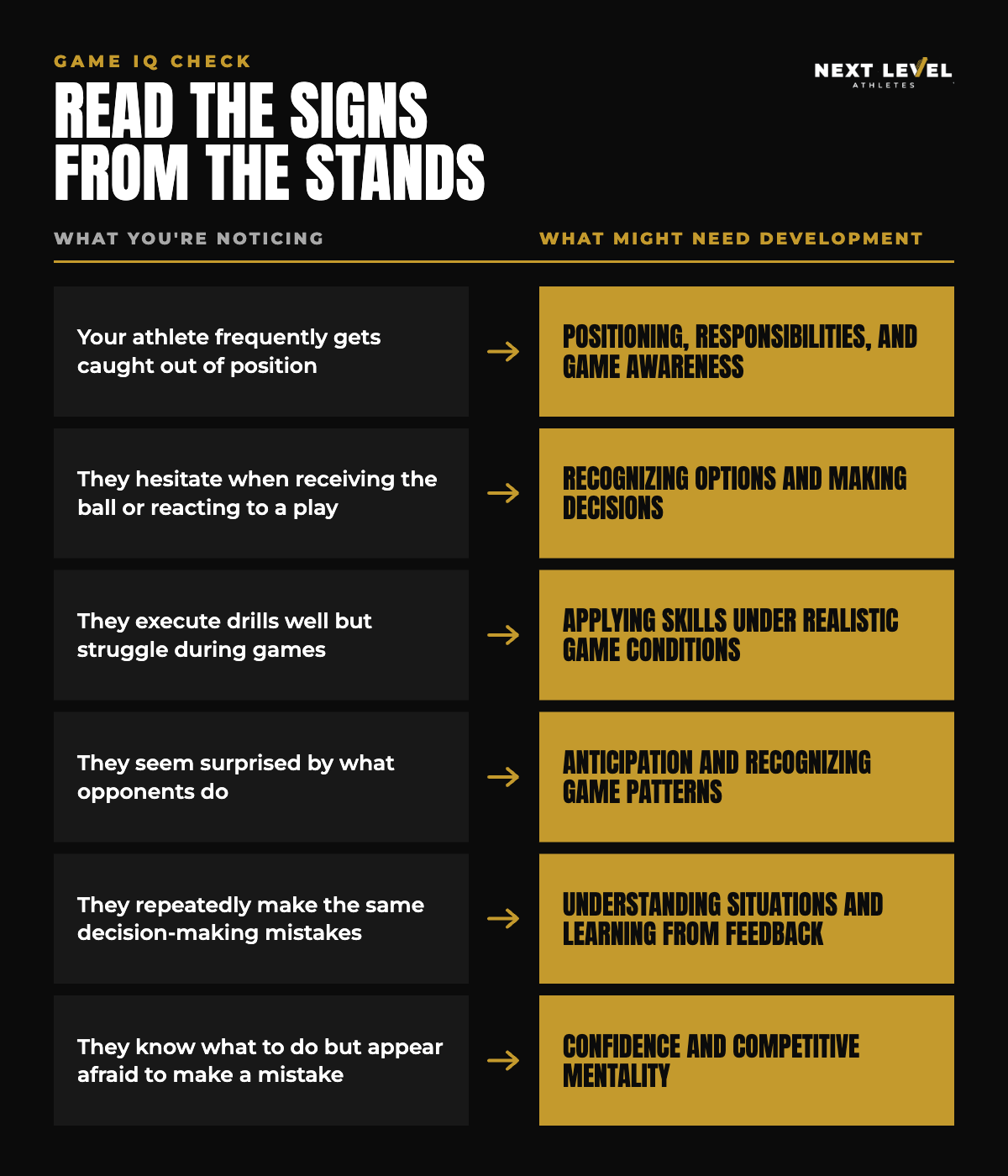
These aren't definitive explanations. They're starting points for understanding what your athlete might need.
And that's important because the solution depends on the problem.
If your athlete struggles to recognize defensive coverage, running more sprints isn't going to solve that.
If your athlete understands the right play but doesn't have the speed to get into position, they may need to improve their athleticism.
If they recognize the situation but hesitate because they're afraid of making a mistake, confidence may be the bigger issue.
You have to understand what's holding your athlete back before you can develop the right plan to help them improve.
At What Age Should Youth Athletes Start Learning Game IQ?
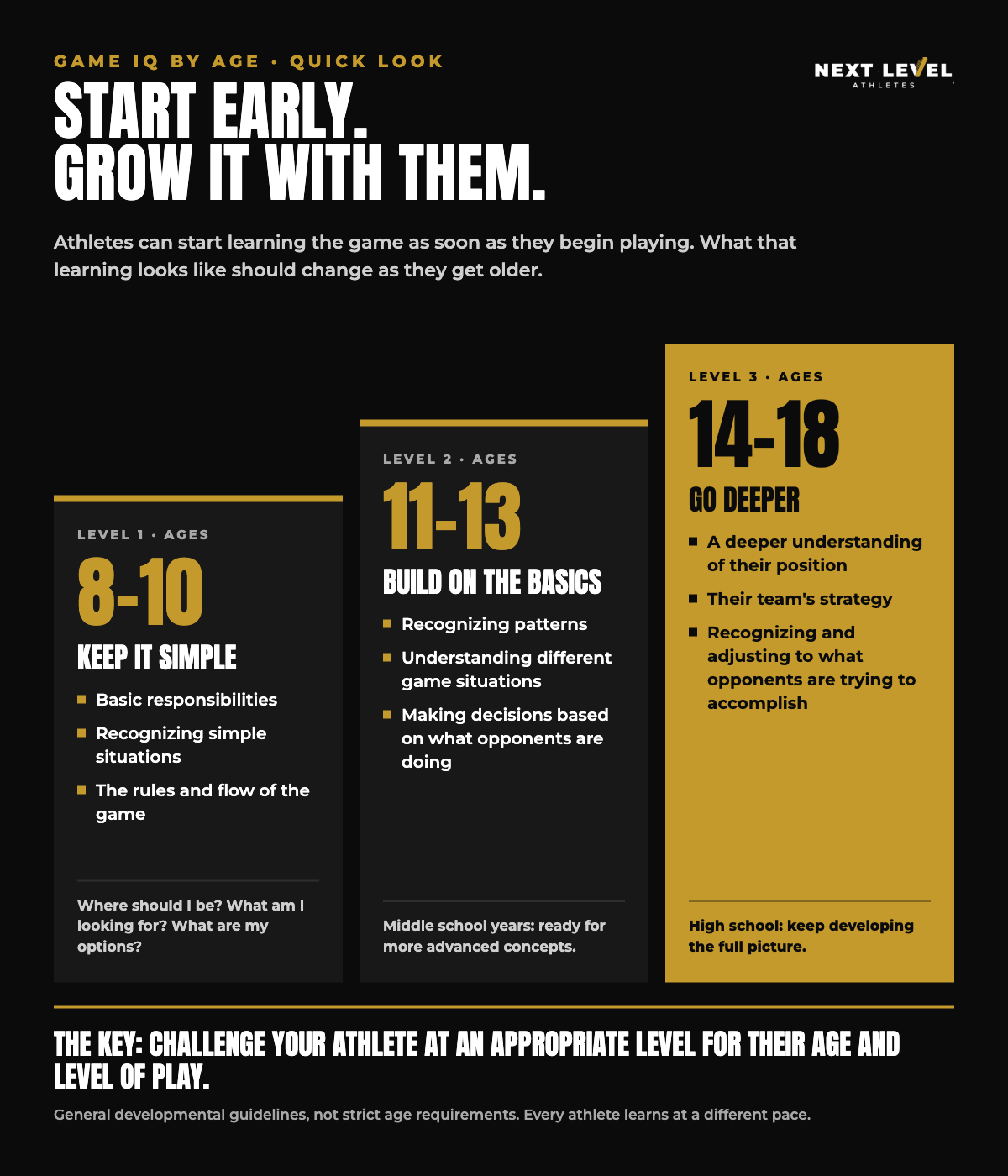
I believe athletes should start developing their understanding of the game as soon as they're old enough to begin learning and participating in their sport.
But what that looks like should change as they get older.
For younger athletes, around ages 8–10, the focus should be on basic responsibilities, recognizing simple situations, and understanding the rules and flow of the game.
At this stage, keep it simple.
You don't need to teach a 9-year-old every defensive coverage or complicated offensive concept. Help them understand where they should be, what they're looking for, and what their basic options are.
As athletes move into the middle school years, roughly ages 11–13, they can begin learning more advanced concepts.
They can start recognizing patterns, understanding different game situations, and making decisions based on what opponents are doing.
By high school, athletes should be continuing to develop a deeper understanding of their position, their team's strategy, and how to recognize and adjust to what opponents are trying to accomplish.
These are general developmental guidelines, not strict age requirements. Every athlete learns at a different pace.
The key is to challenge your athlete at an appropriate level without overwhelming them.
Can Watching Sports Improve Game IQ?
Yes, watching sports can be a useful tool for developing Game IQ, especially when athletes are actively learning from what they're watching.
But there's a difference between watching a game for entertainment and studying how the game is played.
If your athlete is watching basketball, encourage them to pay attention to how players move without the ball.
If they're watching football, have them look at defensive alignments and how receivers adjust to coverage.
If they're watching baseball, talk about different situations and where players should position themselves.
The goal is to help your athlete begin recognizing patterns and understanding why certain decisions are made.
But watching games shouldn't replace actually playing.
Athletes need opportunities to apply what they're learning, make decisions under pressure, and gain experience through competition.
Watching helps athletes understand what they might do. Playing gives them the opportunity to learn how to do it.
The Bottom Line: Game IQ Is Developed Through Experience, Teaching, and Repetition
I've coached a lot of athletes over the years, and I can tell you that the most physically gifted player isn't always the one who makes the biggest impact.
Sometimes it's the athlete who understands the game better.
The athlete who recognizes what's happening before everyone else.
The athlete who knows where to be, understands their role, and consistently makes decisions that help their team.
That's what developing Game IQ can do.
But it doesn't happen overnight.
It takes time, experience, good coaching, and opportunities to learn from different situations.
And as a parent, you can play an important role in that development.
You don't have to know everything about your athlete's sport. You don't have to become their personal coach.
You can help by encouraging them to ask questions, watching games together, creating opportunities to practice decision-making, and allowing them to learn from mistakes.
Most importantly, understand that developing a complete athlete takes more than improving physical skills.
Speed matters. Strength matters. Sport-specific skills matter.
But athletes also need to understand how to use those abilities when the game is on the line.
Because the goal isn't just to develop an athlete who can execute a drill.
It's to develop an athlete who can recognize the situation, make the right decision, and execute when it matters.
Every athlete has a next level. And developing their Game IQ is part of helping them reach it.